
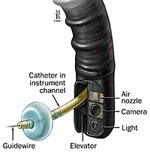
Stricture Dilatation
A therapeutic endoscopic procedure used to widen (dilate) narrowed areas of the gastrointestinal (GI) tract called strictures.
Strictures can be caused by inflammation, scarring, tumors, surgery, or radiation.
The goal is to relieve obstruction symptoms (difficulty swallowing, abdominal pain, bloating, constipation, or vomiting).
Techniques of Stricture Dilatation
Balloon Dilatation
Inflatable balloon passed through endoscope → gradually inflated to stretch narrowing.
Provides controlled, graded dilatation.
Bougie Dilatation
Long, tapered dilators (Savary-Gilliard, Maloney bougies) passed through stricture to widen it.
Done progressively with increasing sizes.
Indications (Where It’s Used)
Esophageal strictures (peptic stricture, post-surgical, caustic injury, achalasia adjunct).
Pyloric stenosis (narrowing between stomach and duodenum).
Small bowel strictures (e.g., Crohn’s disease).
Colorectal strictures (post-surgical anastomotic stricture, IBD, radiation injury).
Biliary strictures (ERCP-guided balloon dilatation).
Advantages
Minimally invasive alternative to surgery.
Provides immediate relief of obstruction symptoms.
Can be repeated if stricture recurs.
Risks
Bleeding
Perforation (most serious complication)
Recurrence of stricture (may require repeat dilatation or stenting)
Treatment
- Esophageal strictures
- Pyloric stenosis
- Small bowel strictures
- Colorectal strictures