
Manometry
A diagnostic test that measures pressure and muscular activity in hollow organs, most commonly the esophagus, anorectal region, or stomach.
Mechanism:
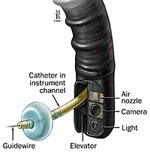
A thin, flexible catheter with pressure sensors is inserted into the organ
Records muscle contractions, sphincter function, and coordination during rest and activity (e.g., swallowing)
Common Uses / Indications
Esophageal Manometry
Evaluate esophageal motility disorders:
Achalasia
Diffuse esophageal spasm
Nutcracker esophagus
Assess lower esophageal sphincter (LES) function before anti-reflux surgery
Anorectal Manometry
Assess anal sphincter function
Evaluate chronic constipation, fecal incontinence, or Hirschsprung disease
Gastric/Intestinal Manometry
Rarely used to evaluate gastroparesis or intestinal motility disorders
Treatment
- Achalasia
- Gastroparesis
- ESD → larger or early invasive mucosal lesions
- EFTR → deeper or complex lesions requiring full-thickness removal