Enteroscopy
Double Balloon-Assisted Enteroscopy
Also called push-and-pull enteroscopy or balloon-assisted enteroscopy
Mechanism:
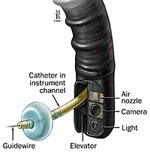
Uses an endoscope inside an overtube, each with a balloon
Balloons alternately inflate/deflate while tubes are advanced/withdrawn
Gathers the intestine in sections (like pushing a sleeve up the arm) → allows access to deep small bowel
Approaches:
Antegrade (via mouth)
Retrograde (via colon)
Indications / Uses
Diagnose & treat conditions in the small intestine:
Removal of polyps
Detect/treat bleeding sources
Dilate strictures (narrowings)
Retrieve foreign bodies (including retained capsules)
Remove stones blocking bile duct (esp. after gastric bypass)
Take biopsies for IBD, celiac disease, tumors, etc.
Place stents to widen/open obstructed segments
Advantages
Provides direct visualization of the small bowel
Allows both diagnosis and treatment in one procedure
Complements capsule endoscopy (which is diagnostic only)
Limitations / Risks
Technically complex, requires specialized training
Longer procedure time
Risks: perforation, bleeding, pancreatitis (rare)
Treatment
- Obscure gastrointestinal bleeding
- Polyp Removal
- Stricture Dilation
- Foreign Body Retrieval